

Close Menu
Transforming HR Through TechnologyTransforming HR Through Technology

    Subscribe to Updates

    Stay updated with the latest insights from HRTechLogic on HR innovation, technology, and business trends.

    What's Hot

    How to Evaluate DEI & Inclusion Software for Enterprise Organizations

    February 4, 2026

    How DEI Platforms Improve Engagement, Retention, and Organizational Trust

    February 4, 2026

    Core Pillars and Practices of Effective DEI Programs

    February 4, 2026
    Facebook X (Twitter) Instagram
    • Contact Us
    • About Us
    LinkedIn RSS
    Transforming HR Through TechnologyTransforming HR Through Technology
    Subscribe
    • Recruitment & Onboarding
      • Applicant Tracking Systems (ATS)
      • Recruitment Marketing
      • Candidate Experience
      • Interviewing & Scheduling
      • Pre-Employment Testing & Assessments
      • Job Boards & Talent Marketplaces
      • Onboarding Software
      • Recruitment Analytics
      • Background Checks & Screening
    • Learning & Development
      • Learning Management Systems (LMS)
      • Learning Experience Platforms (LXP)
      • Digital Learning Platforms
      • Micro Learning
      • eLearning Authoring Tools
      • Skills Management
      • Upskilling & Reskilling
      • Leadership Development
      • Training Analytics
    • Employee Engagement & Experience
      • Employee Engagement Platforms
      • Employee Experience (EX) Platforms
      • Employee Feedback & Surveys
      • Performance Management
      • Recognition & Rewards
      • Internal Communications
      • Employee Advocacy
      • Corporate Wellness
      • DEI & Inclusion
    • Payroll, Pay & Compliance
      • Payroll Software
      • Pay Equity
      • Global Payroll
      • Compensation Management
      • Benefits Administration
      • Expense Management
      • Employment Law & Compliance
      • HR Risk & Governance
      • ESG & Workforce Compliance
    • People Analytics & Insights
      • HR Analytics Platforms
      • People Analytics
      • Workforce Analytics
      • Talent Intelligence
      • Predictive Analytics
      • Employee Data Platforms
      • Reporting & Dashboards
    • Workforce Management
      • Workforce Management Systems
      • Time & Attendance
      • Scheduling & Shift Planning
      • Absence & Leave Management
      • Workforce Planning
      • Distributed & Remote Workforce
      • Productivity Monitoring
      • Global Workforce Management
    Transforming HR Through TechnologyTransforming HR Through Technology
    Home»Recruitment & Onboarding»Interviewing & Scheduling»Structured Interviews: Why Standardization Improves Fairness and Hiring Accuracy
    Interviewing & Scheduling

    Structured Interviews: Why Standardization Improves Fairness and Hiring Accuracy

    AdminBy AdminJanuary 25, 2026Updated:January 25, 2026No Comments2 Mins Read
    Facebook Twitter Pinterest LinkedIn Tumblr Email
    Share
    Facebook Twitter LinkedIn Pinterest Email

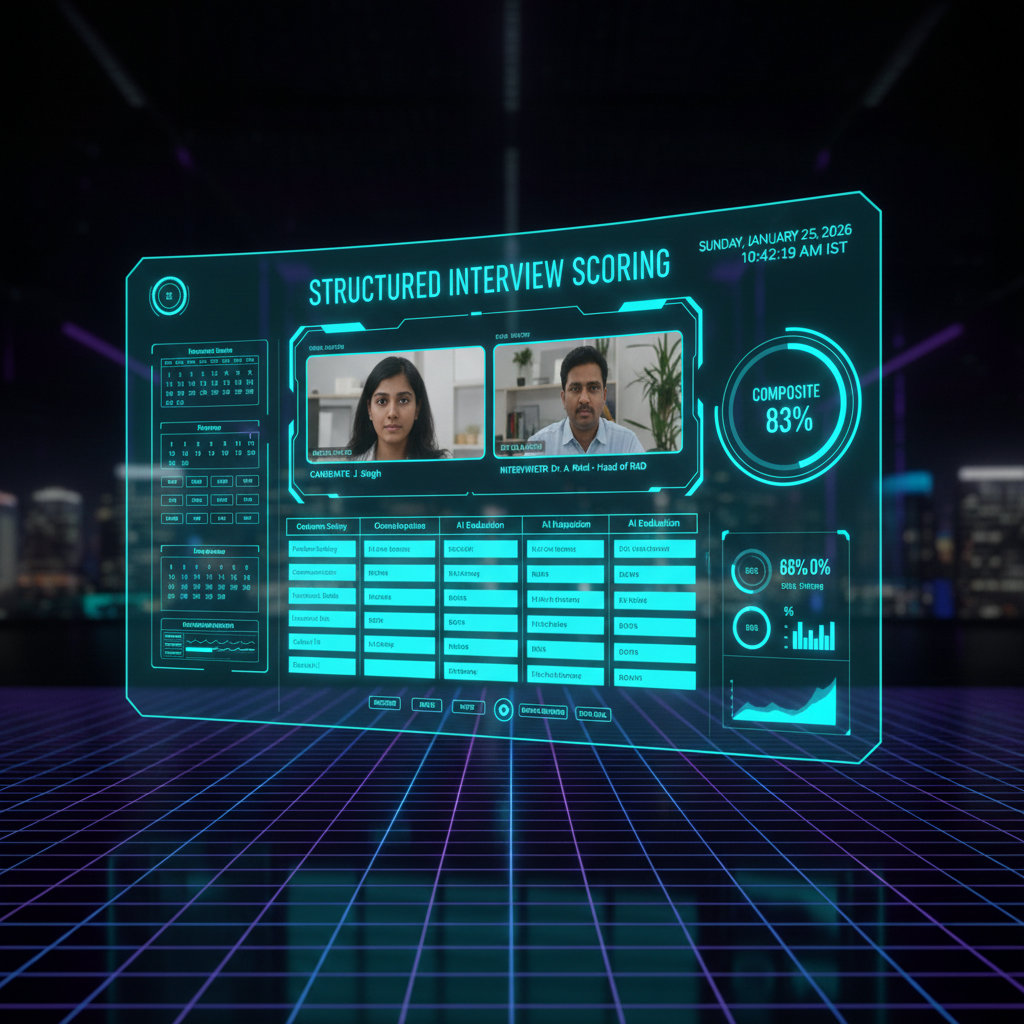
    Structured interviewing has become the dominant best practice for improving hiring accuracy and reducing bias in talent evaluation. Instead of relying on unstructured conversational interviews, structured interviews use predefined question sets, competency-based evaluation criteria, and standardized scoring frameworks to compare candidates objectively. This shift has been driven by research linking structured interviewing to improved predictive validity and reduced variability in decision-making.

    The structured approach begins with role analysis. Hiring teams identify the skills, competencies, and behavioral indicators associated with successful performance. These may include technical skills, communication, decision-making, leadership, or problem-solving capabilities depending on the role. Once competency areas are defined, interview questions are designed to elicit evidence through behavioral prompts or situational scenarios. For example, behavioral interviews ask candidates to describe past experiences (“Tell me about a time…”), while situational interviews present hypothetical scenarios requiring analytical response.

    Evaluation criteria represent a core component. Instead of subjective impressions, interviewers assess responses using scoring rubrics that define what strong, average, or weak responses look like for each competency. This reduces interviewer bias and creates consistency across candidate evaluations. Calibration sessions allow hiring teams to align scoring standards and improve reliability.

    From an operational standpoint, structured interviews enhance candidate fairness by minimizing informal variation across interviewers. They also support compliance initiatives, particularly in regulated environments where audit trails and documentation are critical. Interview notes, scores, and decision rationales can be stored in ATS or interview platforms for internal review.

    Structured interviews do not eliminate human judgment but constrain it within a more reliable framework. They improve signal-to-noise ratio, reduce halo effects, and focus hiring decisions on performance indicators rather than subjective affinity or similarity bias. High-growth companies and enterprises adopting structured interviewing report improved correlation between hiring decisions and post-hire performance metrics.

    Candidate perception also benefits. Structured interviews feel more professional and transparent, enhancing candidate confidence and engagement. When combined with prompt communication and efficient scheduling, structured interviews contribute to positive candidate experience and offer acceptance.

    Competency-Based Evaluation Compliance Hiring Fairness HR Best Practices Structured Interviews Talent Assessment
    Share. Facebook Twitter Pinterest LinkedIn Tumblr Email
    Admin
    • Website

    Related Posts

    Core Pillars and Practices of Effective DEI Programs

    February 4, 2026

    Types of Employee Recognition & Rewards Programs Used by High-Performing Organizations

    February 1, 2026

    Selecting Recruitment Analytics Solutions: Key Evaluation Criteria for Talent Leaders

    January 25, 2026
    Add A Comment
    Leave A Reply Cancel Reply

    Recent Posts

    • How to Evaluate DEI & Inclusion Software for Enterprise Organizations
    • How DEI Platforms Improve Engagement, Retention, and Organizational Trust
    • Core Pillars and Practices of Effective DEI Programs
    • What Is DEI & Inclusion and Why It Is a Strategic Business Priority
    • How to Evaluate Corporate Wellness Platforms for Enterprise Organizations
    Top Reviews

    Core Pillars and Practices of Effective DEI Programs

    By Admin

    Types of Employee Recognition & Rewards Programs Used by High-Performing Organizations

    By Admin

    Selecting Recruitment Analytics Solutions: Key Evaluation Criteria for Talent Leaders

    By Admin
    Editors Picks

    Core Pillars and Practices of Effective DEI Programs

    February 4, 2026

    Types of Employee Recognition & Rewards Programs Used by High-Performing Organizations

    February 1, 2026

    Selecting Recruitment Analytics Solutions: Key Evaluation Criteria for Talent Leaders

    January 25, 2026

    How Recruitment Analytics Platforms Improve Talent Decisions and Reduce Hiring Costs

    January 25, 2026
    Transforming HR Through Technology
    LinkedIn RSS
    • Home
    • About Us
    • Contact Us
    © 2026 Designed by HRTECHLogic.

    Type above and press Enter to search. Press Esc to cancel.