


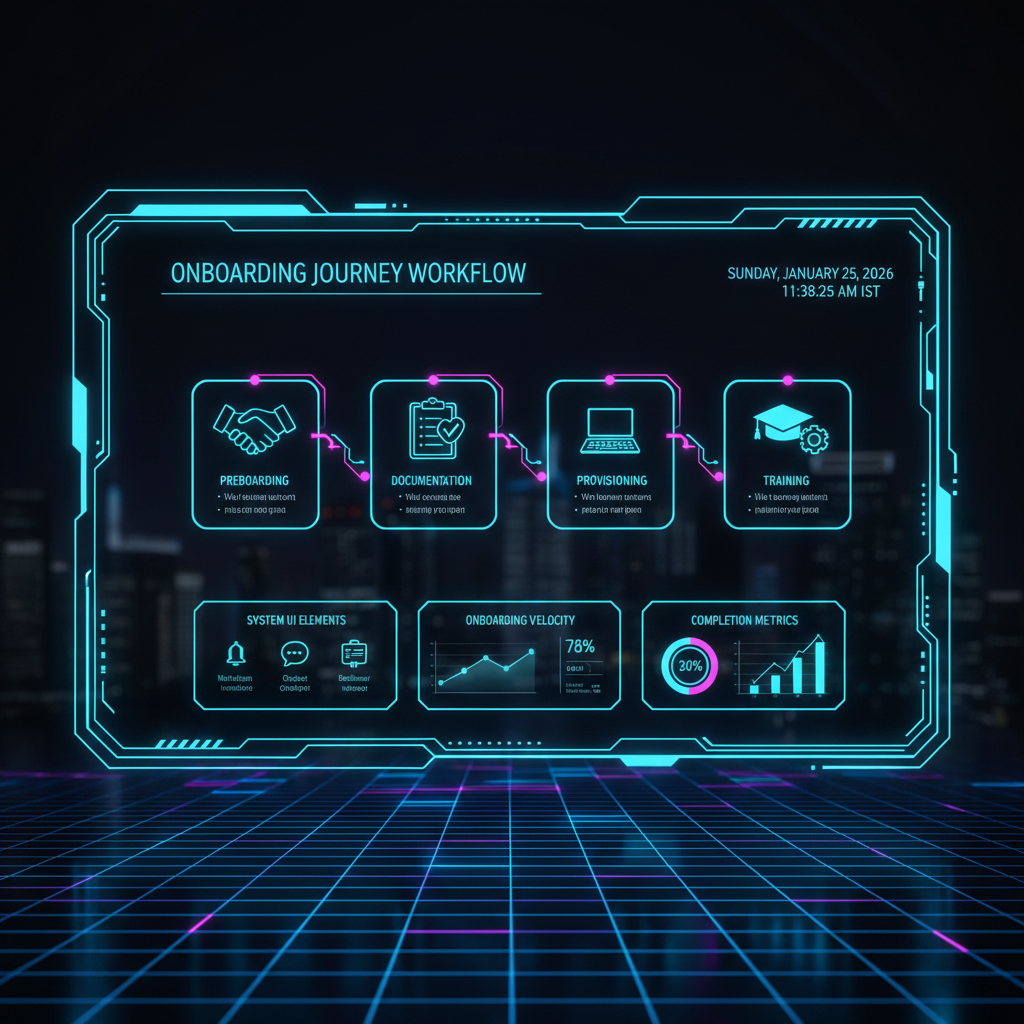
A modern onboarding workflow includes several interconnected components that ensure new hires transition efficiently into their roles. The major components typically include pre-boarding, documentation, provisioning, compliance, training, culture integration, and feedback.
Pre-boarding begins after offer acceptance and continues until day one. It may include paperwork, welcome communication, company introductions, and logistics. Effective pre-boarding reduces first-day uncertainty and lowers renege risk, particularly in competitive markets where candidates may receive multiple offers.
Documentation covers regulatory and payroll-related forms such as tax declarations, identity verification, benefits enrollment, background completion records, and employment contracts. Digitization reduces errors and accelerates processing. Automated e-signature capabilities accelerate compliance and reduce manual tracking overhead.
Provisioning involves physical and digital setup. For office-based roles, this may include workstations, access badges, and equipment. For remote roles, provisioning includes laptops, credentials, collaboration tools, VPN access, and HRIS onboarding. Delays in provisioning directly affect productivity and morale.
Training and development introduce core skills and knowledge. Compliance training ensures legal and regulatory alignment. Functional training enables role-specific performance. Integration with LMS systems allows scalability, tracking, and certification.
Culture integration addresses belonging and engagement. This includes introductions to company values, mission, leadership, and team communication norms. Mentorship, buddy programs, and structured social onboarding accelerate integration and reduce early attrition driven by cultural mismatch.
Feedback mechanisms assess onboarding quality through surveys, pulse checks, and milestone feedback. Data informs process optimization, highlights bottlenecks, and enhances experience design.
A modern onboarding workflow matters because it shapes early performance, retention, and engagement. Research consistently shows that structured onboarding improves 90-day retention and accelerates time-to-productivity. Organizations that overlook onboarding face higher early turnover, weaker engagement, and prolonged ramp-up cycles.
