


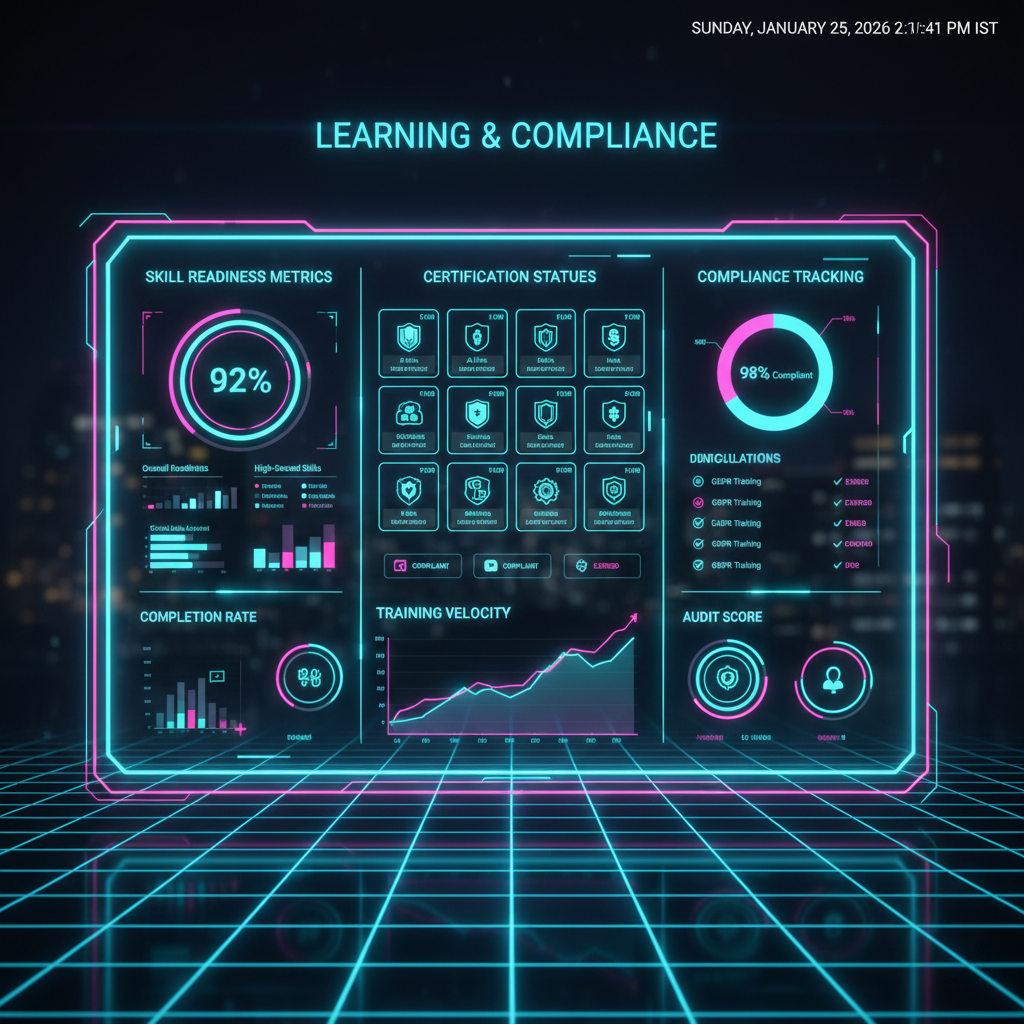
Learning Management Systems deliver business value by improving workforce readiness, accelerating skills development, and supporting compliance obligations. Organizations face growing requirements to ensure employees possess the skills, certifications, and knowledge required to perform their roles safely and effectively. LMS platforms create structured and measurable learning systems that support these needs.
Workforce readiness improves when employees are trained efficiently and consistently. LMS platforms standardize training delivery, ensuring learners across regions or shifts receive the same instruction. This reduces variability in knowledge and performance that can arise from instructor-led or informal training models.
Compliance outcomes are another major driver of LMS adoption. Industries such as healthcare, pharmaceuticals, manufacturing, aviation, and finance must comply with training mandates from regulatory authorities. LMS platforms automate certification renewals, track mandatory training, and maintain audit-ready records. Avoiding compliance violations can prevent fines, operational shutdowns, or reputational damage.
From an efficiency perspective, LMS platforms reduce training labor costs compared to in-person training. Digital content can be reused and scaled without requiring repeated instructor time. Remote or hybrid workforces can be trained without disruption.
Data visibility enhances workforce planning. Training analytics reveal gaps in skill readiness, role qualification, and certification status. Leaders can identify areas requiring additional investment or remediation.
Ultimately, LMS platforms strengthen organizational capability, reduce compliance risk, enhance workforce consistency, and enable continuous skill development—making them foundational for enterprise learning environments.
