


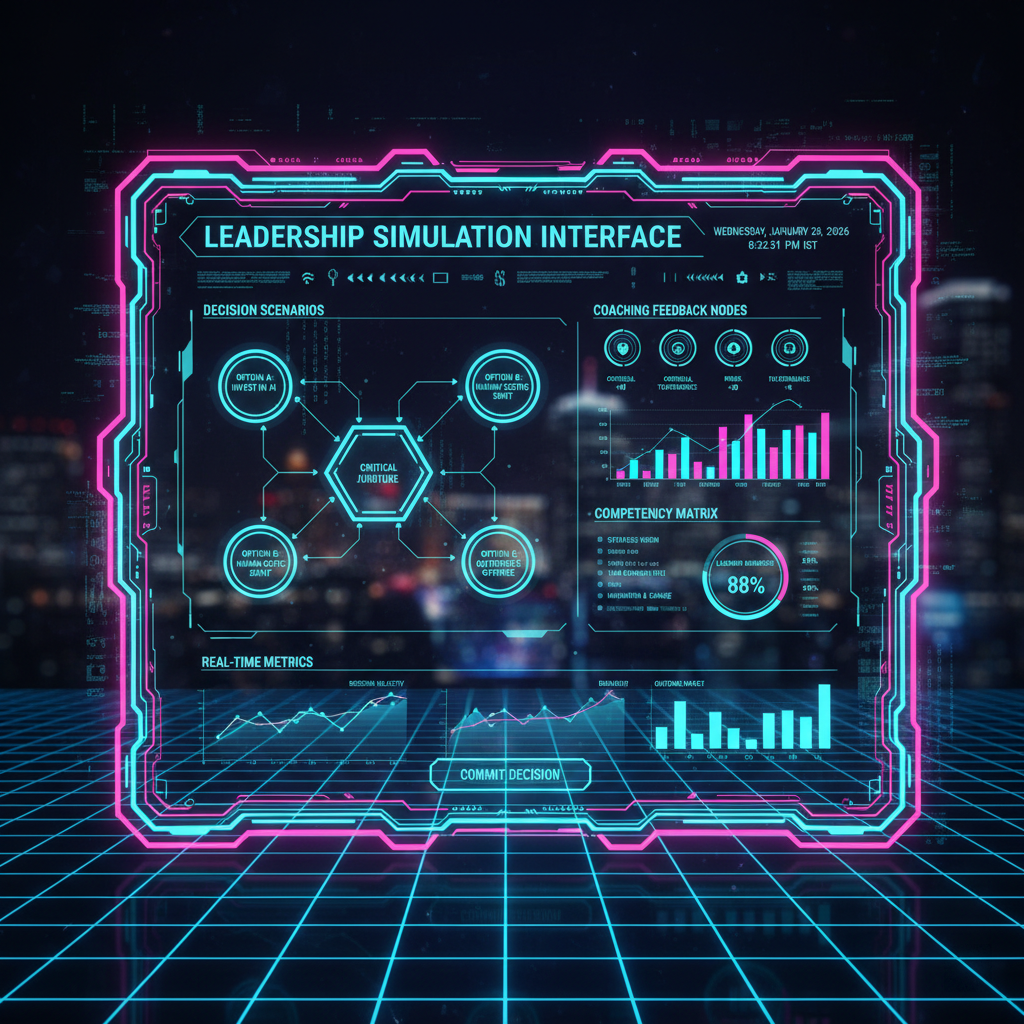
Leadership development programs typically include competency frameworks, assessments, coaching, mentorship, experiential learning, scenario-based simulations, and feedback mechanisms. These components work together to build awareness, capability, and execution confidence among emerging and existing leaders.
Competency frameworks define the knowledge, behaviors, and traits required for effective leadership. These frameworks serve as guideposts for talent identification and development design.
Assessments help identify leadership potential and skill gaps. Tools may include psychometric assessments, 360-degree feedback, personality profiles, and behavioral analysis. Assessments reveal strengths, blind spots, and opportunities for targeted growth.
Coaching and mentorship accelerate development by offering personalized guidance and real-time feedback. Executive coaches, peer mentors, and leadership circles provide contextual support that accelerates behavioral change and strategic thinking.
Experiential learning is a foundational component. Leadership cannot be developed solely through theory; learners must engage in stretch assignments, cross-functional projects, job rotations, and decision-making simulations to internalize competence through practice.
Scenario-based learning, such as crisis simulations or market disruption exercises, builds resilience and situational awareness. These experiences develop adaptability—one of the most essential modern leadership traits.
Feedback mechanisms ensure continuous development. Regular reflection, manager check-ins, and performance reviews create structured improvement loops.
Together, these components produce leaders equipped not only with knowledge but with the capacity to act under pressure and guide teams effectively.
