


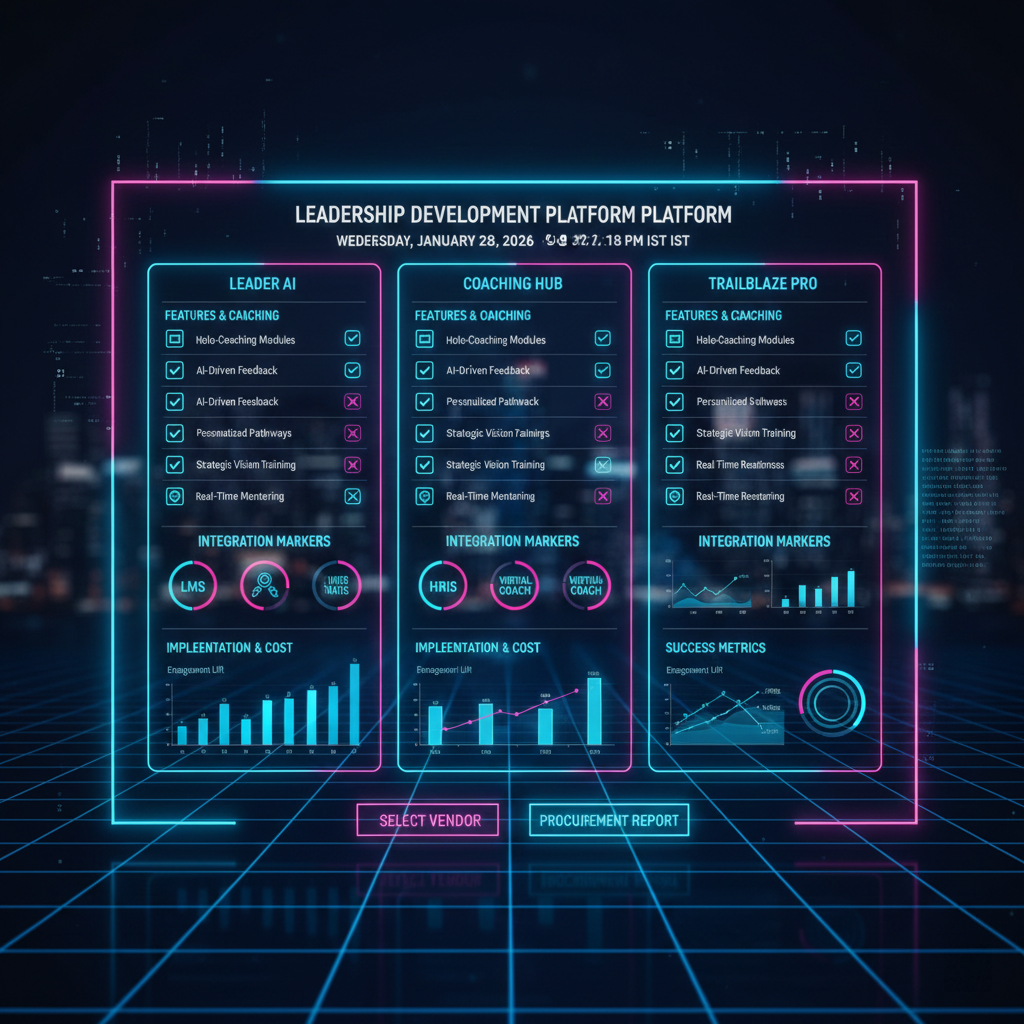
Selecting leadership development solutions requires evaluating providers across competency frameworks, assessment tools, delivery modalities, coaching capabilities, scalability, and analytics. Because leadership development intersects with organizational culture and business strategy, procurement must align with long-term talent architecture rather than ad-hoc training budgets.
Competency frameworks should align with organizational values, strategic priorities, and leadership expectations. Generic frameworks may not reflect industry-specific or transformation-specific needs.
Assessment tools must support multi-dimensional evaluation through psychometrics, 360-degree feedback, and behavioral profiling. Insight quality directly impacts development planning.
Delivery modalities determine accessibility. Programs may include in-person workshops, virtual cohorts, digital academies, self-paced modules, coaching, and peer learning. Multi-modal delivery improves adoption across global and hybrid teams.
Coaching and mentorship capabilities differentiate advanced solutions. Providers should offer certified coaches, structured mentorship programs, and peer coaching frameworks.
Scalability matters for enterprises. Solutions must support global deployment, localization, role-specific pathways, and talent segmentation (first-line leaders vs. senior executives vs. high potentials).
Analytics provide visibility into leadership competencies, behavioral change, succession readiness, and program ROI. Without analytics, leadership development becomes intangible and difficult to justify.
Organizations that apply structured evaluation criteria select solutions that drive measurable capability outcomes and support sustainable leadership pipelines.
