


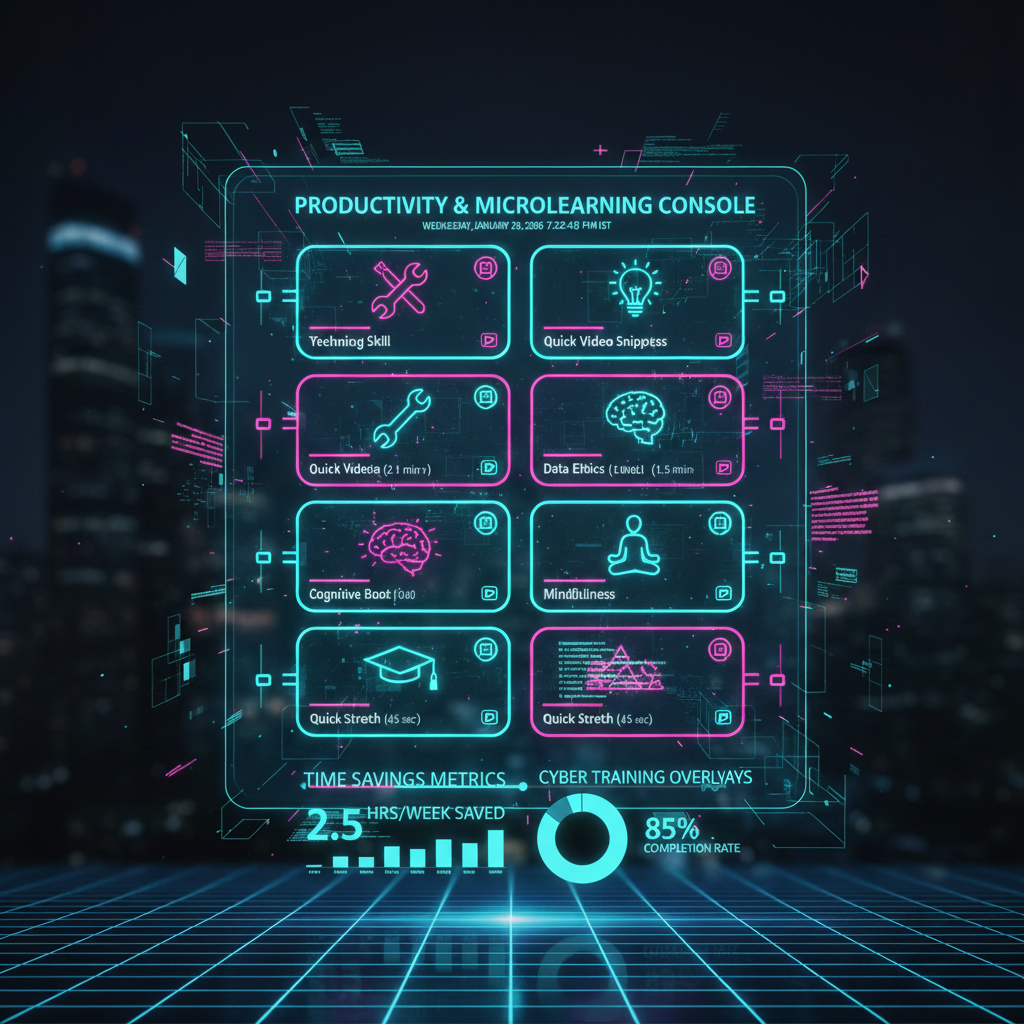
Microlearning platforms generate organizational value by reducing training time, increasing productivity, and accelerating learning deployment. Traditional training programs often require employees to pause their work for extended periods, reducing operational throughput. Microlearning minimizes disruption by allowing employees to learn in short intervals without leaving their workflow for hours at a time. This efficiency is particularly impactful in high-volume environments such as retail, logistics, customer support, and healthcare.
Productivity improves when employees receive information when it is most relevant. Microlearning platforms integrate into digital workflows through mobile apps, QR codes, embedded training widgets, chat-based delivery, and knowledge bases. These tools transform learning into an operational support layer rather than a detached educational activity.
Training deployment becomes faster because microlearning content can be produced quickly and updated without redesigning entire courses. Organizations undergoing rapid change—whether due to new product launches, regulatory updates, or system rollouts—benefit from faster time-to-training. This supports organizational agility and reduces downtime associated with retraining.
Cost reduction emerges from several dimensions. Shorter training time reduces labor cost; scalable digital delivery eliminates classroom expenses; and modular content reduces development cycles. Over time, these efficiencies deliver measurable return on investment, particularly in enterprise-scale deployments.
Microlearning platforms also generate data insights related to performance and knowledge adoption. Leaders can track completion rates, engagement patterns, knowledge retention, and operational performance metrics. These insights inform continuous improvement and support data-driven L&D strategies.
From a workforce perspective, microlearning aligns with how people prefer to learn, increasing adoption and making training feel less intrusive. This strengthens learning culture and improves upskilling traction.
