


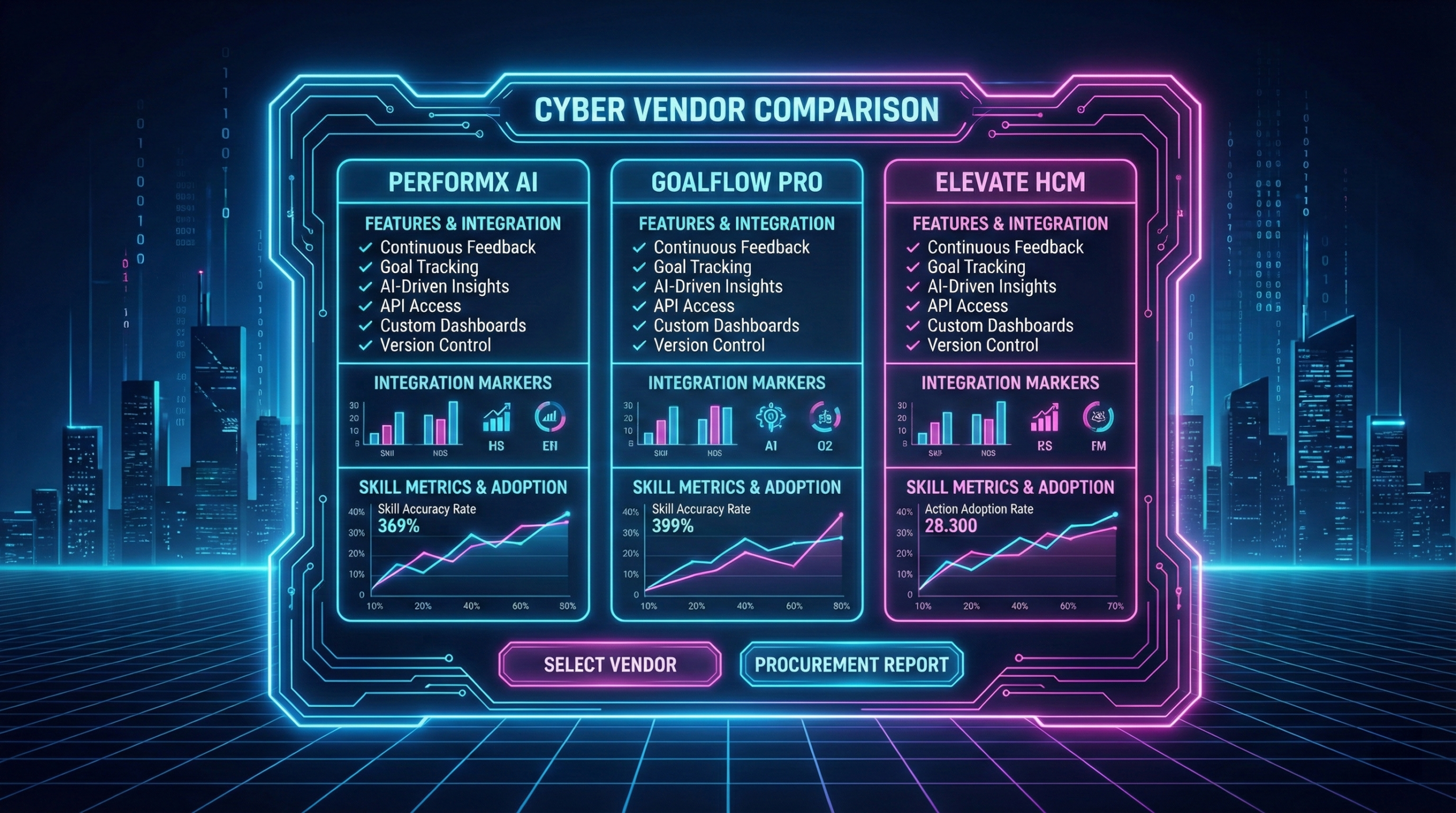
Selecting performance management software requires evaluating solutions across usability, flexibility, analytics, integration, and cultural alignment. Not all platforms support modern continuous performance models.
Goal management flexibility is critical. Platforms should support OKRs, KPIs, cascading goals, and team alignment. Rigid systems limit adoption.
Feedback capabilities determine effectiveness. Look for real-time feedback, check-ins, peer input, and coaching workflows rather than annual-only reviews.
Analytics depth differentiates strategic platforms. Advanced solutions provide trend analysis, bias detection, and performance distribution insights rather than simple ratings.
Integration ensures ecosystem value. Performance systems should integrate with HRIS, learning platforms, engagement tools, and compensation systems to avoid data silos.
User experience drives adoption. Simple interfaces, mobile access, and intuitive workflows encourage consistent usage by managers and employees.
Security and compliance are essential, particularly for global enterprises. Role-based access and audit trails support governance.
By evaluating platforms strategically, organizations can select performance management solutions that drive accountability, growth, and business outcomes.
