


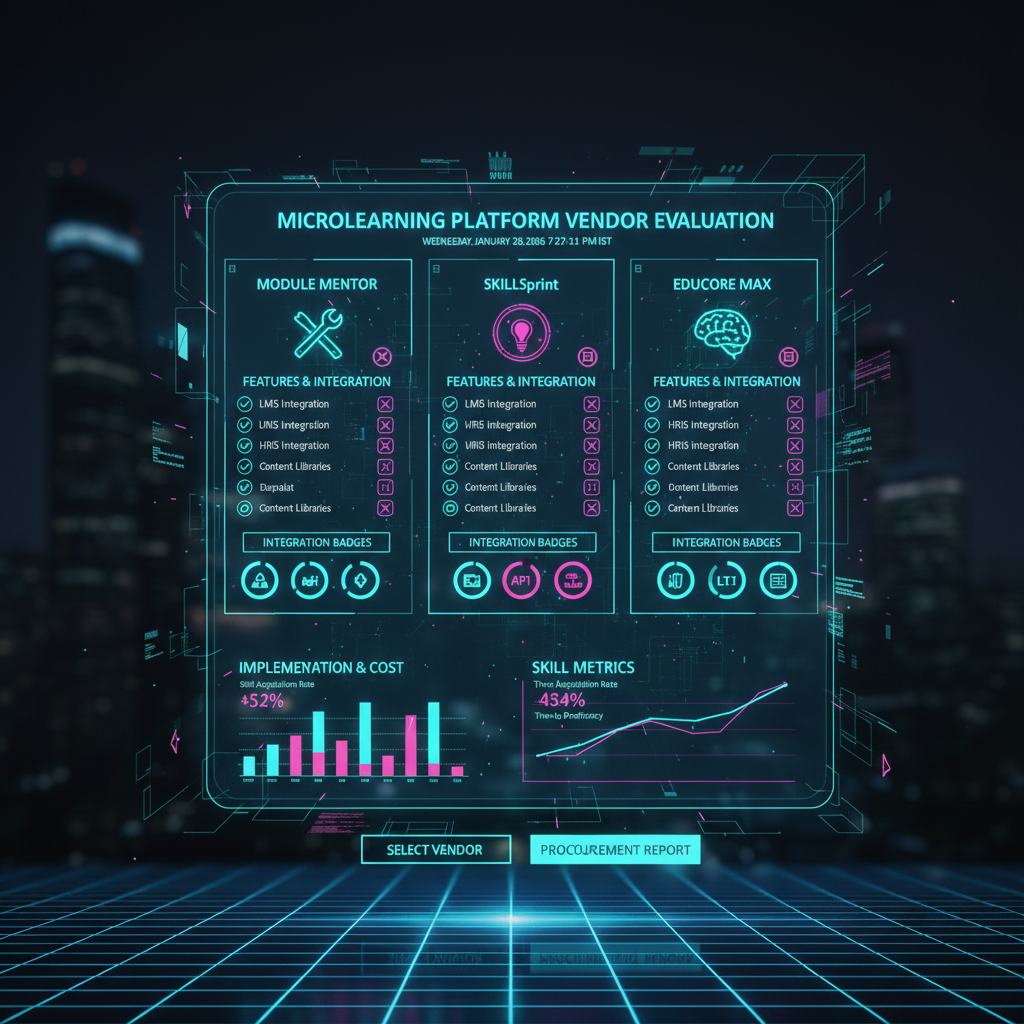
Selecting microlearning solutions requires evaluating platforms across content creation, mobile delivery, integration, analytics, and performance support capabilities. Because microlearning intersects with both L&D and operational workstreams, procurement decisions often involve multiple stakeholders, including operations, HR, training, and technology teams.
Content creation capabilities determine how efficiently microlearning modules can be produced. Solutions should support video, SCORM, xAPI, interactive cards, flashcards, quizzes, and scenario-based design. Low-friction authoring tools reduce dependency on specialist instructional designers and accelerate content iteration.
Mobile-first delivery is essential. Platforms should support responsive design, offline access, push notifications, and lightweight content formats that load quickly on mobile networks. Field operations and frontline environments rely on mobile accessibility for training continuity.
Integration capabilities determine ecosystem alignment. Microlearning systems may need to integrate with LMS, LXP, HRIS, ticketing systems, CRMs, and knowledge management platforms. Integration ensures learning is tracked, credentialed, and tied to performance systems.
Performance support functionality differentiates enterprise-ready platforms. Features such as QR-based training, contextual popups, in-app knowledge bots, and embedded job aids bridge the gap between learning and application.
Analytics capabilities should provide visibility into engagement, retention, competency gains, and performance impact. Data exports and dashboards support compliance, workforce planning, and ROI measurement.
By applying these criteria, organizations can select microlearning solutions that improve training efficiency, strengthen performance, and align with broader digital learning strategy.
