


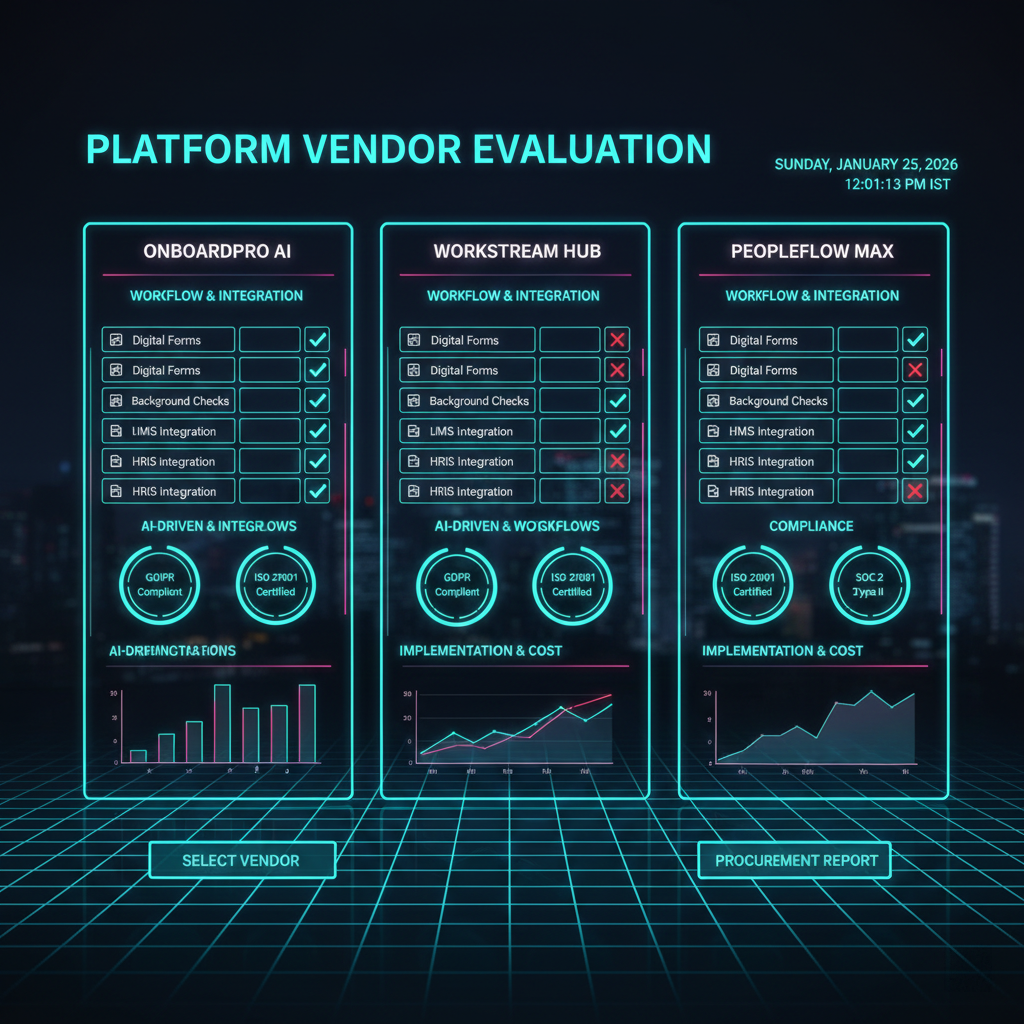
Selecting onboarding software requires buyers to evaluate solutions across integration, compliance, user experience, scalability, and multi-stakeholder orchestration. Because onboarding systems sit at the intersection of HR, IT, payroll, facilities, and training, platform choice affects multiple operational layers.
Integration is a primary purchasing factor. Onboarding platforms must connect with ATS, HRIS, payroll, identity systems, provisioning workflows, learning platforms, and collaboration tools. Integrations reduce manual data transfer, prevent errors, and unify lifecycle records. Open APIs, native connectors, and SSO support influence interoperability.
Compliance features are critical. Platforms must support digital signatures, regulatory document collection, I-9 verification (in U.S. markets), data retention policies, and privacy compliance frameworks such as GDPR or CCPA. Workflow rules ensure timely completion of required documentation and audits.
User experience defines adoption. New hires must navigate onboarding without confusion, delays, or fragmented communication. Mobile access, multilingual interfaces, guided checklists, and progress tracking enhance usability. Candidate and new hire UX influence brand perception and engagement.
Scalability and configurability matter for enterprise use cases. Multi-location organizations require role-based workflows, jurisdiction-specific content, and delegated access for operational units. Remote and global teams require cloud accessibility and support for asynchronous onboarding.
Experience design extends beyond software functionality. Platforms increasingly include cultural onboarding tools such as welcome portals, leadership videos, social introductions, and mentoring programs. Vendors also differentiate through analytics dashboards measuring engagement, task completion, and time-to-productivity.
By applying a structured evaluation lens, organizations can select onboarding platforms that improve operational efficiency, strengthen experience design, and support global workforce expansion while maintaining compliance and interoperability.
