


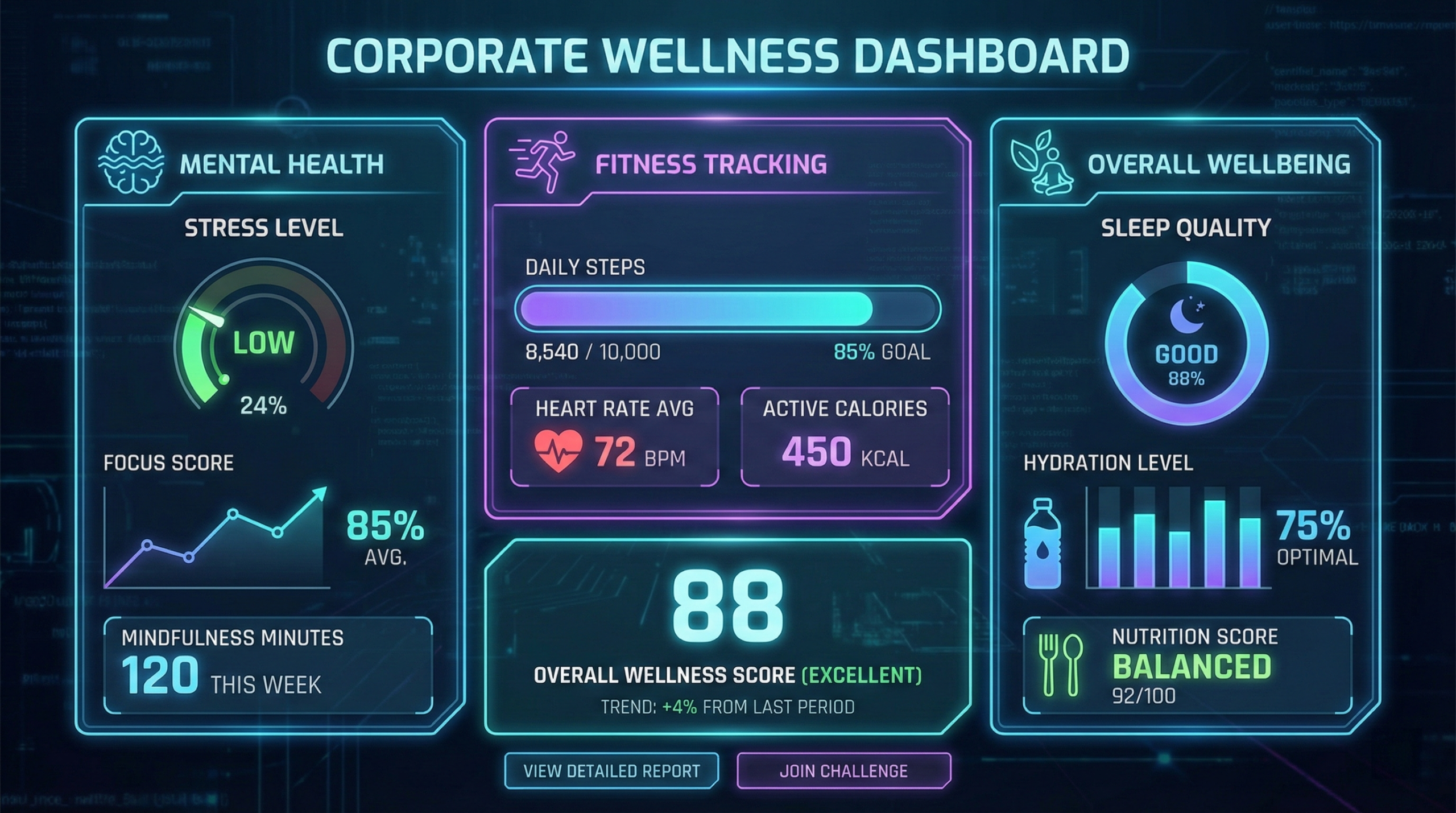
Corporate wellness refers to structured programs and initiatives designed to support employees’ physical, mental, emotional, and financial wellbeing. Modern corporate wellness extends beyond fitness benefits to address stress management, mental health support, work-life balance, preventive care, and holistic wellbeing.
As work environments become more complex and demanding, employee wellbeing has become a strategic priority. Poor wellbeing leads to burnout, absenteeism, disengagement, and higher healthcare costs. Conversely, healthy employees are more productive, resilient, and engaged.
Corporate wellness programs typically include mental health resources, counseling access, fitness initiatives, nutrition guidance, financial wellbeing education, and wellbeing awareness campaigns. Digital wellness platforms make these programs accessible to remote and hybrid employees.
According to the World Health Organization (https://www.who.int), workplace stress has a direct impact on productivity and long-term health outcomes. Organizations that proactively support wellbeing reduce risk and improve workforce sustainability.
Wellness is also closely tied to employer brand. Employees increasingly evaluate employers based on how they support wellbeing. A strong wellness culture signals care, empathy, and long-term commitment to employees.
Corporate wellness is no longer a perk—it is an organizational resilience strategy that supports engagement, retention, and performance.
