


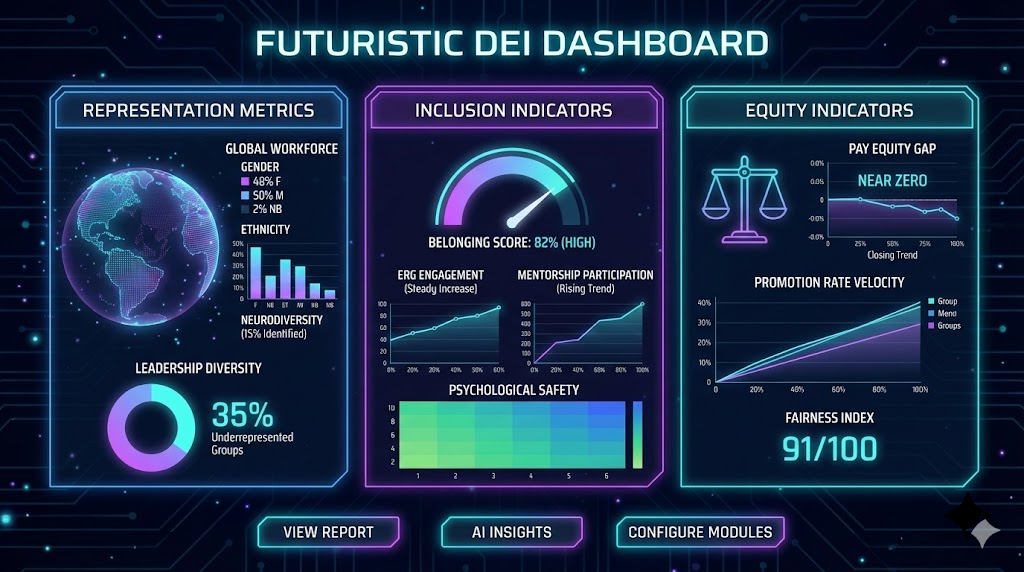
Diversity, Equity, and Inclusion (DEI) refers to organizational practices designed to ensure fair representation, equitable opportunities, and inclusive experiences for all employees. Diversity focuses on representation across demographics and backgrounds, equity ensures fairness in access and outcomes, and inclusion creates a culture where everyone feels valued and respected.
Modern DEI initiatives go beyond compliance and hiring targets. They address systemic barriers, unconscious bias, leadership accountability, and inclusive culture-building. Organizations increasingly recognize DEI as a driver of innovation, performance, and long-term sustainability.
Research from McKinsey & Company (https://www.mckinsey.com) consistently shows that organizations with diverse leadership teams outperform peers in profitability and innovation. Inclusion enables diverse perspectives to translate into better decision-making.
DEI also impacts employee engagement and retention. Employees who feel included are more likely to contribute, collaborate, and stay. Inclusive cultures improve psychological safety, which supports learning and performance.
From an employer branding perspective, DEI signals organizational values. Candidates increasingly evaluate employers based on inclusion, representation, and fairness.
In distributed and global workforces, DEI becomes even more critical. Inclusive policies ensure equitable access to opportunities regardless of location or background.
Ultimately, DEI is not an initiative—it is an operating model that shapes how organizations attract, develop, and retain talent.
