


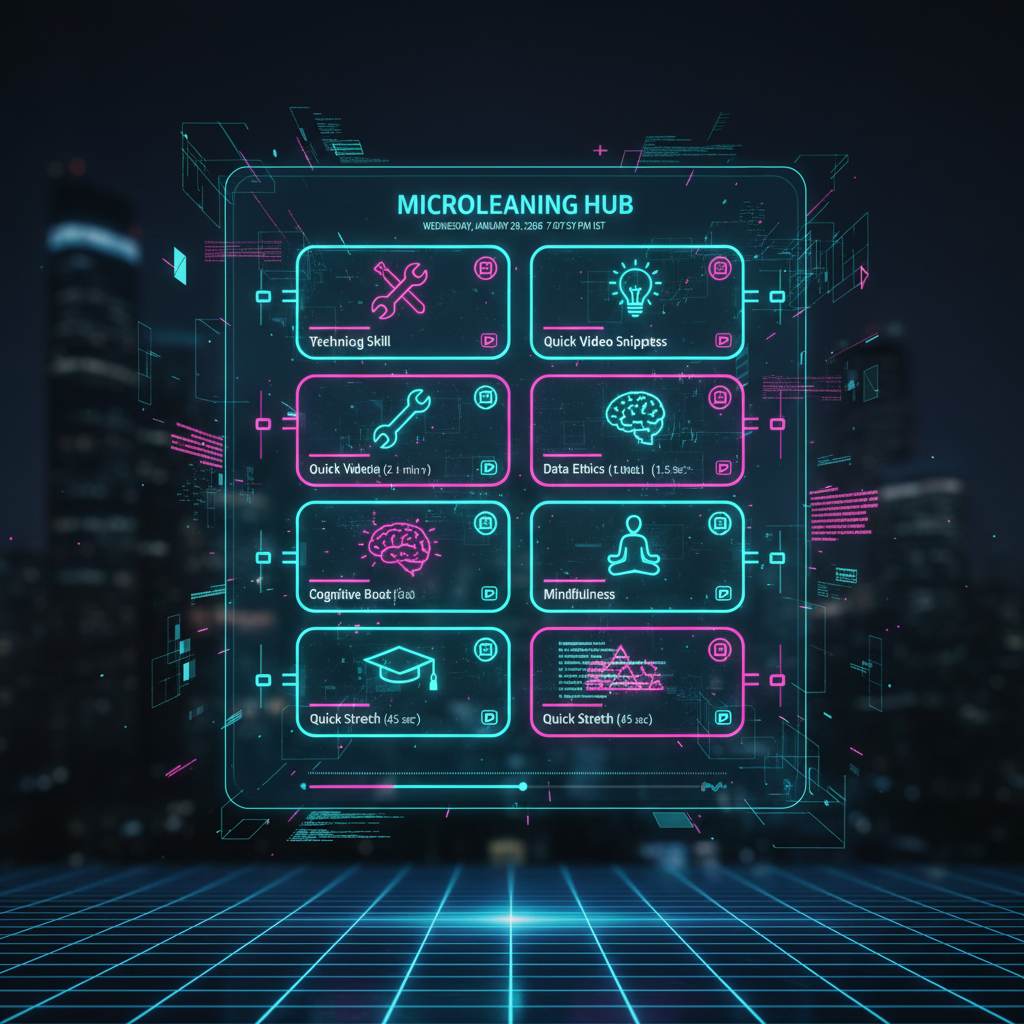
Microlearning is an instructional design approach that delivers content in short, focused learning segments that typically span from a few seconds to several minutes. Unlike traditional long-form courses or multi-hour training modules, microlearning breaks down educational information into digestible units that support rapid consumption, better retention, and on-demand access. The model aligns with modern work environments where time constraints, cognitive load, and attention scarcity limit participation in lengthy training programs.
Microlearning can take multiple forms, including short videos, interactive snippets, flashcards, quizzes, scenario-based modules, animations, chat-based training, and job aids. These formats are optimized for quick learning and immediate application, making microlearning valuable for frontline roles, fast-paced industries, and hybrid or remote workforces.
One of the foundational advantages of microlearning is just-in-time learning. Employees can access content exactly when they need it—during workflows, at the point of performance, or prior to specific tasks. This reduces knowledge decay and improves practical retention. For example, a customer service representative might access a quick module before handling a new product inquiry, or a technician might review a short troubleshooting walkthrough before performing a task.
Cognitive science research supports the microlearning model. Short, spaced exposures reduce cognitive overload and enhance memory retention through spaced repetition and reinforcement. When paired with adaptive sequencing, microlearning can reinforce skills over time, combating the forgetting curve more effectively than one-time training events.
Microlearning also supports continuous learning culture. Employees engage more frequently when training fits into micro-moments rather than requiring dedicated blocks of time. This increases voluntary participation and broadens learning adoption across the organization.
Collectively, microlearning represents a shift from traditional course-based training to flexible, learner-centric, and context-aware learning methods that align with the realities of modern work.
