


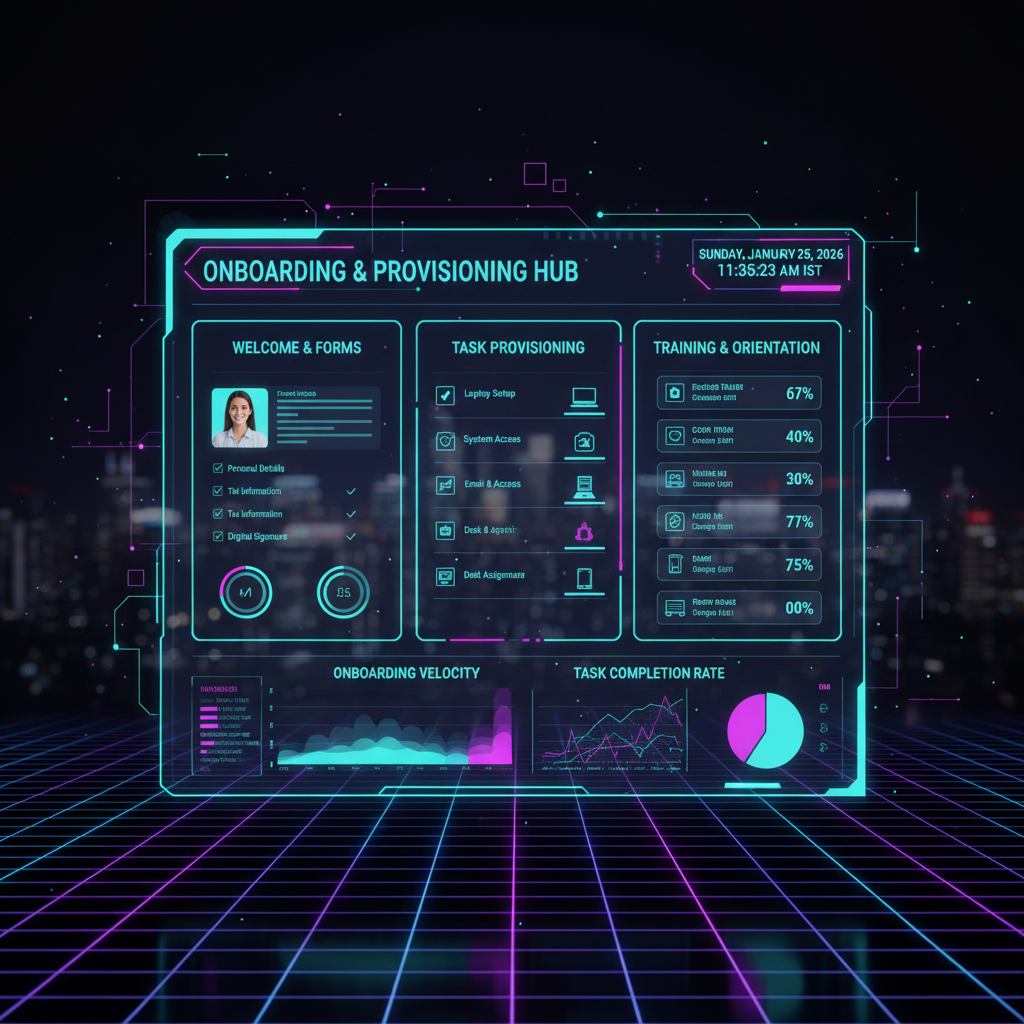
Onboarding software is designed to streamline, automate, and standardize the new hire integration process from offer acceptance to full productivity. While recruitment systems focus on candidate acquisition, onboarding bridges the transition from being a candidate to becoming an employee. This phase includes documentation, compliance, training, orientation, provisioning, and cultural integration activities that influence engagement and retention. Without structured onboarding, organizations risk productivity delays, miscommunication, compliance errors, and early turnover.
At its core, onboarding software centralizes tasks, forms, workflows, and communications associated with new hire activation. Platforms facilitate digital form completion for tax, payroll, benefits, and regulatory documentation, reducing paper-based processes and minimizing administrative labor. Automated workflow management assigns responsibilities across HR, hiring managers, IT, and facilities, ensuring that provisioning tasks (such as laptop distribution, account creation, access controls, or workspace setup) are completed prior to start dates.
Training and orientation modules introduce new hires to organizational culture, values, policies, and expectations. Learning experiences may include compliance training, role-specific instruction, mentorship, and guided task sequencing. Integration with Learning Management Systems (LMS) extends onboarding into structured skills development.
Onboarding software also enhances communication and transparency. New hires receive structured instructions, checklists, and timelines that reduce uncertainty and improve engagement. For distributed and remote workforces, digital onboarding becomes essential for visibility and coordination, replacing traditional in-person orientation.
Compliance and documentation control are additional benefits. Onboarding platforms maintain digital audit trails, enforce signature collection, and track form completion status. For regulated industries such as healthcare, government, or financial services, documentation accuracy and retention standards are critical.
Data from onboarding platforms improves workforce analytics by measuring time-to-productivity, role ramp-up speed, task completion, and engagement milestones. Insights inform talent strategy and highlight friction points in onboarding workflows.
Ultimately, onboarding software reduces administrative burden, accelerates productivity, and improves new hire experience by providing structured, standardized, and digitized onboarding journeys.
