


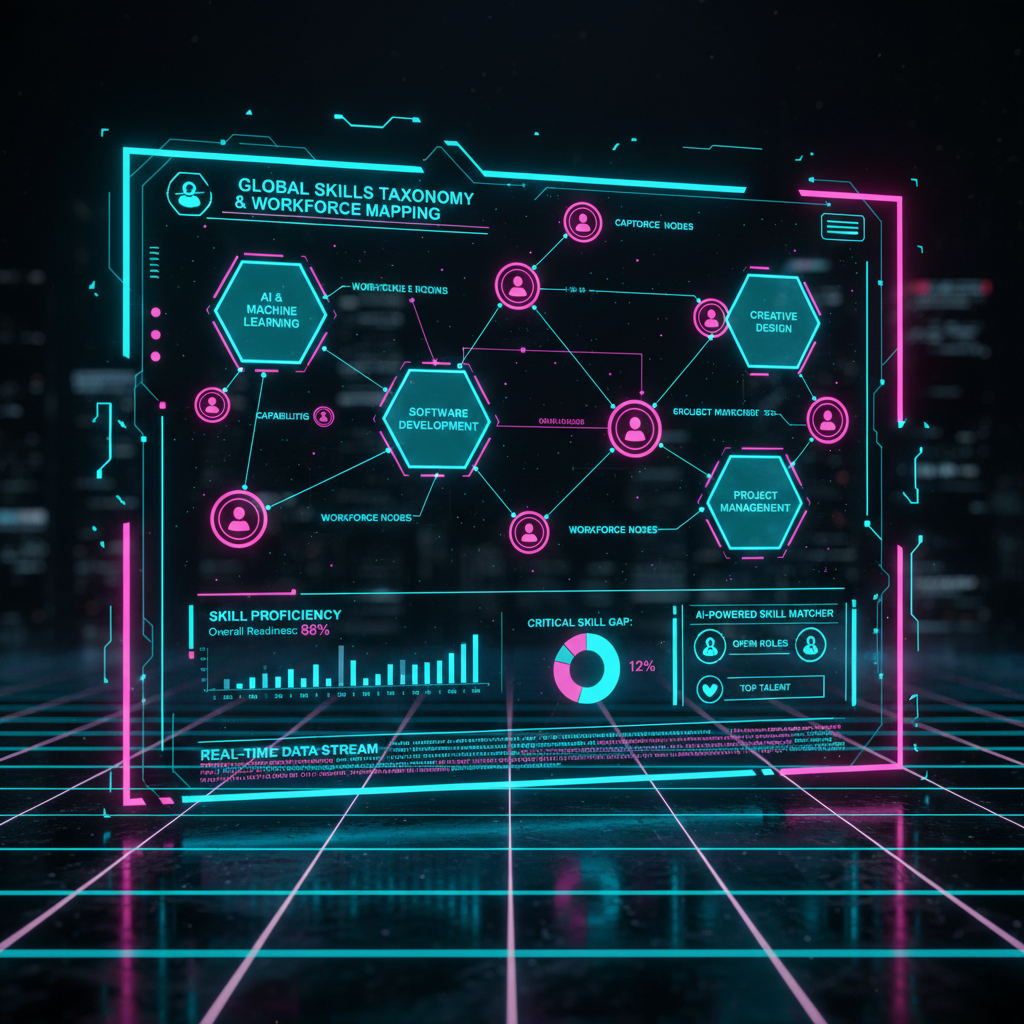
Skills management refers to the systematic process of identifying, assessing, developing, and deploying skills across an organization to ensure the workforce has the capabilities required to achieve business objectives. Unlike traditional job-based talent models that focus on titles and roles, skills management prioritizes capabilities, competencies, and proficiency levels. This shift reflects the changing nature of work driven by automation, digital transformation, and evolving market needs.
Skills management spans several dimensions: skills taxonomy design, skill assessments, proficiency mapping, role-to-skill frameworks, skill development pathways, and analytics to monitor workforce capability readiness. Organizations use skills management to align talent development with strategic priorities such as digital transformation, customer experience, operational modernization, and workforce agility.
The rise of skills-based approaches stems from the inadequacy of role-based models in fast-changing environments. Job descriptions quickly become outdated, while skills provide a granular view of what employees can do and what the organization needs to remain competitive. Skills management supports internal mobility by making skill profiles transparent and matching employees to opportunities based on capability rather than tenure or job title.
Skills management also strengthens learning strategy. When skill gaps are identified through assessments or performance metrics, targeted training programs can be deployed to close capability gaps. This ensures training investments are aligned to measurable business outcomes rather than generic learning consumption.
From an HR perspective, skills management enhances workforce planning, talent acquisition, and succession planning. Organizations gain visibility into emerging skills, declining competencies, and strategic workforce risks, allowing proactive intervention.
In summary, skills management enables modern workforce transformation by shifting organizations from static job-based structures to dynamic skills-based talent ecosystems
